
Canteen volumes and serving patterns
The Institutional Kitchens page is for large canteen and feeding programmes that need honest specs and dependable product handling. It suits school and similar kitchen environments where volume, budget and service practicality matter every day. The emphasis is on beef that is clearly described, sensibly packed and workable for big meal counts.
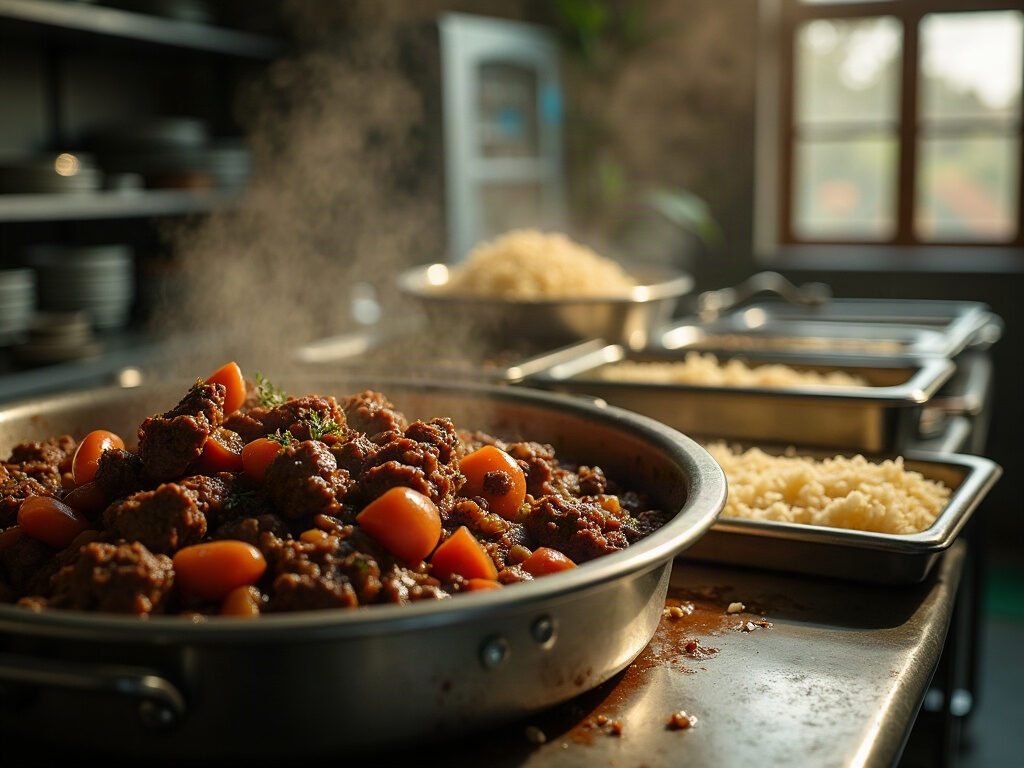
School and institutional kitchens buy for headcount first, then cost per portion, then ease of service. That shifts the focus to dependable beef lines, sensible pack sizes and cuts that hold well for stews, mince dishes, curries and gravy meals. Across inland and coastal sites, receiving times, cold room space and staff turnover shape what can be handled properly each day.
At goods receiving, the first checks are usually temperature, pack condition, labels and use-by details. A simple handling sheet in the cold room helps kitchen supervisors brief the next shift on thawing, decanting and batch cooking without losing traceability. In high-output feeding programmes, those small controls matter as much as the menu itself.
Specs that suit bulk feeding
The useful outcome is a product brief that names the cut, trim level, pack format and intended dish, so the kitchen is not guessing at prep. For institutional service, a smaller range with consistent descriptions works better than a long list that complicates ordering. Clear packing and repeatable case contents help stores teams count stock quickly during busy intake windows.
Before extending the menu cycle, line up the kitchen requirement with the relevant Sectors page and record the current setup in Notes. Check labels, carton counts and seal condition before stock moves into storage, then send any questions through the contact form.
- Cuts suited to stew pots
- Receiving checks at first intake
Kitchen conditions across South Africa
Large feeding sites work around school terms, hostel demand, clinic meal counts and municipal procurement rules. Some kitchens have strong cold storage and trained receiving staff, while others rely on tighter delivery windows and straightforward carton labelling. The specification has to reflect the site, not an ideal setup on paper.
Load-shedding changes thawing plans, batch timing and how long prep tables can stay in use before product returns to chill. Coastal humidity can affect carton handling and storage discipline, while hotter inland conditions place more pressure on handover between receiving and refrigeration. In older service kitchens, simple portion control and robust pack identification reduce confusion during peak meal periods.
Operated by Astros Marketing (Pty) Ltd from 2 Makro Place, Sunnyrock 1401.
Records for audits and stock control
Honest specs for large canteen programmes.
Keep the delivery note, product spec and internal issue sheet together for each intake. That makes it easier for catering managers, bursars and procurement staff to trace what was ordered, what arrived and which menu cycle used it. When meal counts are high, tidy paperwork supports the kitchen just as much as the product does.
What our Pasture-Raised Beef customers say
Verified Google reviews