
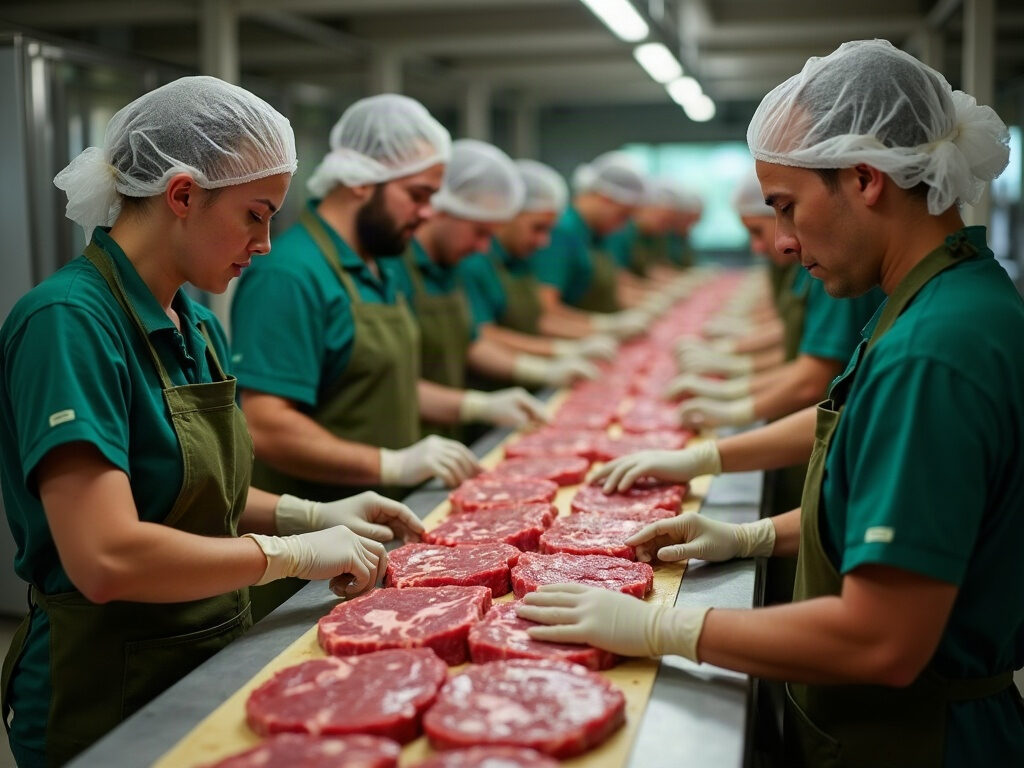
Retail pack control points
The Contract Packing page covers co-pack windows for branded retail SKUs. It is aimed at programmes where pack format, label accuracy and chilled handling need to line up across supply and retail requirements. Beefy Africa uses this route when a customer needs retail-ready protein without losing control of the product spec.
Contract packing starts with the exact retail outcome: tray size, vacuum pack or bag format, label fields, and chilled shelf-life requirement. Branded runs for butchery fridges, hotel deli cabinets, and export kitchen programmes all need the pack spec tied to the cut spec before product is booked. In South African trade, dispatch timing also has to account for cold-chain handover, retailer receiving windows, and power disruption planning.
Label checks need to happen against the approved artwork and the physical pack, not only on a PDF. Batch coding, packed-on date, weight declaration, allergen statements where relevant, and barcode readability should be verified before volume leaves the cold room. A simple handling card at receiving helps staff check seal integrity, count accuracy, and storage temperature as soon as stock lands.
What a co-pack run covers
The output is a defined packing programme with product spec, pack format, count per carton, and the checks required at dispatch and receiving. For chilled protein, carton build, pallet discipline, and route timing matter as much as the label on the front of pack. Retail-ready stock only works when the packing brief matches how the buyer merchandises and stores the product.
Use the matching sector page and the contact form when you need to discuss branded retail SKUs, chilled handling, or a change in pack presentation. Include the protein type, target unit weight, expected volumes, and whether the packs are for butchery retail, hospitality resale, or export kitchen allocation. Before dispatch, confirm label version, pack count, and cold-room condition against the agreed spec.
Cold-chain realities in South Africa
Co-pack planning in this market has to account for long road legs, cross-docking pressure, and strict receiving slots at retail and hospitality sites. OR Tambo export movements, regional cold-store access, and carrier cut-off times can all change how a packing day is built. Where the end customer needs retail-facing packs, outer carton marking and traceability must stay clear right through distribution.
Coastal humidity affects carton condition and label adhesion, especially where chilled stock moves in and out of loading areas. Inland summer heat raises the risk around staging time outside controlled temperature areas, so portioning, sealing, and dispatch need tighter sequencing. During power cuts, backup capacity and shortened door-open periods become part of packing discipline, not an afterthought.
Operated by Astros Marketing (Pty) Ltd from 2 Makro Place, Sunnyrock 1401.
Pack brief details to include
Co-pack windows for branded retail SKUs.
Send the SKU name, cut description, pack type, target weight range, label requirements, and destination channel when setting up a contract packing discussion. It also helps to note whether stock is for shelf display, back-of-house chilled holding, or onward export kitchen use. The clearer the brief, the easier it is to align product specification with the retail pack expected at receiving.
What our Pasture-Raised Beef customers say
Verified Google reviews